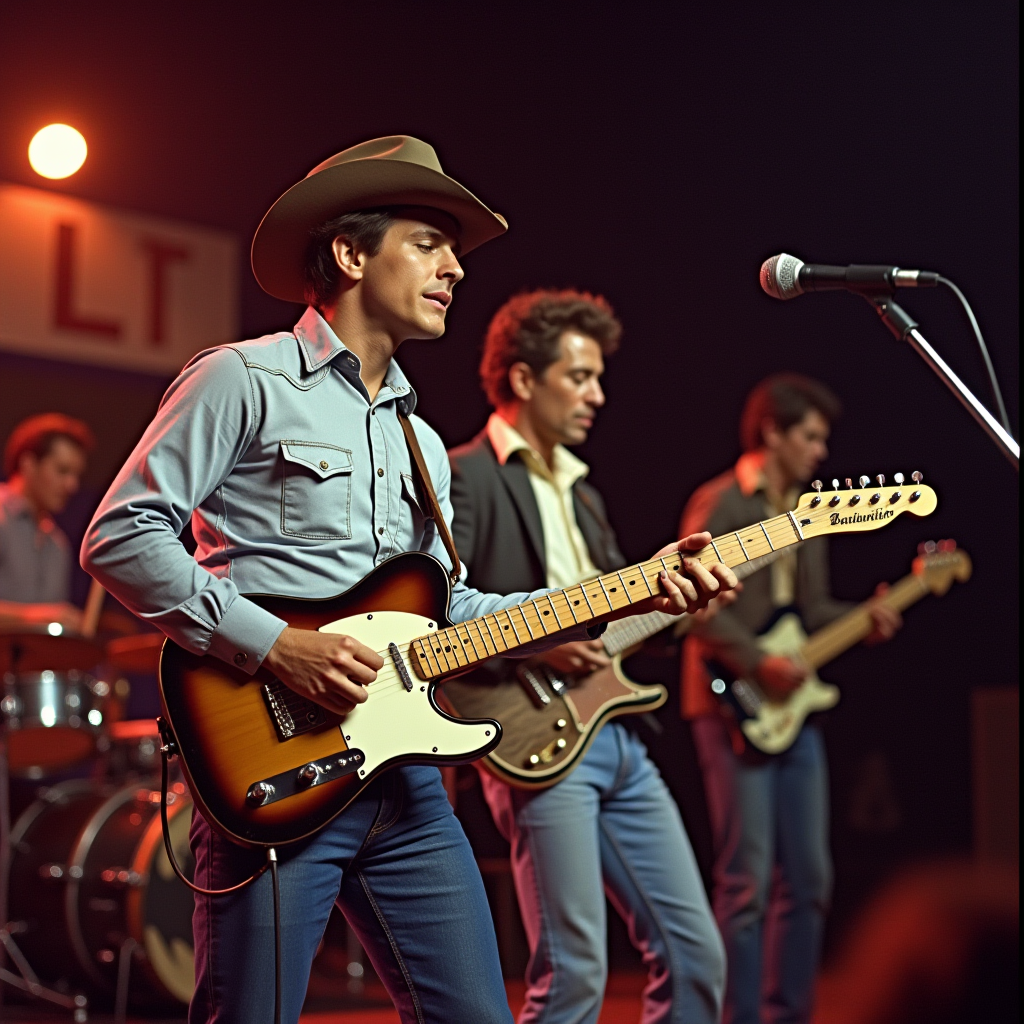
In the 1950s and '60s, while Nashville was smoothing country music into the lush, string-laden “Nashville Sound,” a scrappier alternative was taking shape 2,000 miles west in the honky-tonks of Bakersfield, California. What came out of those bars would change country music permanently.
A working-town sound
Bakersfield was a landing spot for families who'd left the Dust Bowl for California's oil fields and farms. The music that thrived in its dance halls was loud, electric, and made for people who worked hard and wanted to dance harder. It leaned on the sharp bite of the Fender Telecaster, a driving backbeat, and—crucially—an aggressive, cutting pedal steel.
Buck, Merle, and the architects
Two names tower over the style. Buck Owens and his Buckaroos, powered by Don Rich's Telecaster and Tom Brumley's soaring steel, produced a string of number ones with a bright, unmistakable twang. Merle Haggard brought a deeper, more literary edge—his records with steel man Ralph Mooney defined the grittier side of the sound.
Why it still matters
The Bakersfield sound was a statement: country music didn't have to be polished to be great. That DNA runs straight through the outlaw movement of the '70s, the neotraditional revival of the '80s, and the new-traditional artists of today. When Dwight Yoakam plugged a Telecaster back in during the '80s, he was carrying the Bakersfield torch—and so is every steel-forward record we play now.
Hear the style in its purest form on The Bakersfield Hour every Saturday, and woven throughout our classic-country programming all week long.